
oilfield water treatment chemicals UAE GCC complete guide
Complete Guide to Oilfield Water Treatment Chemicals in UAE and GCC
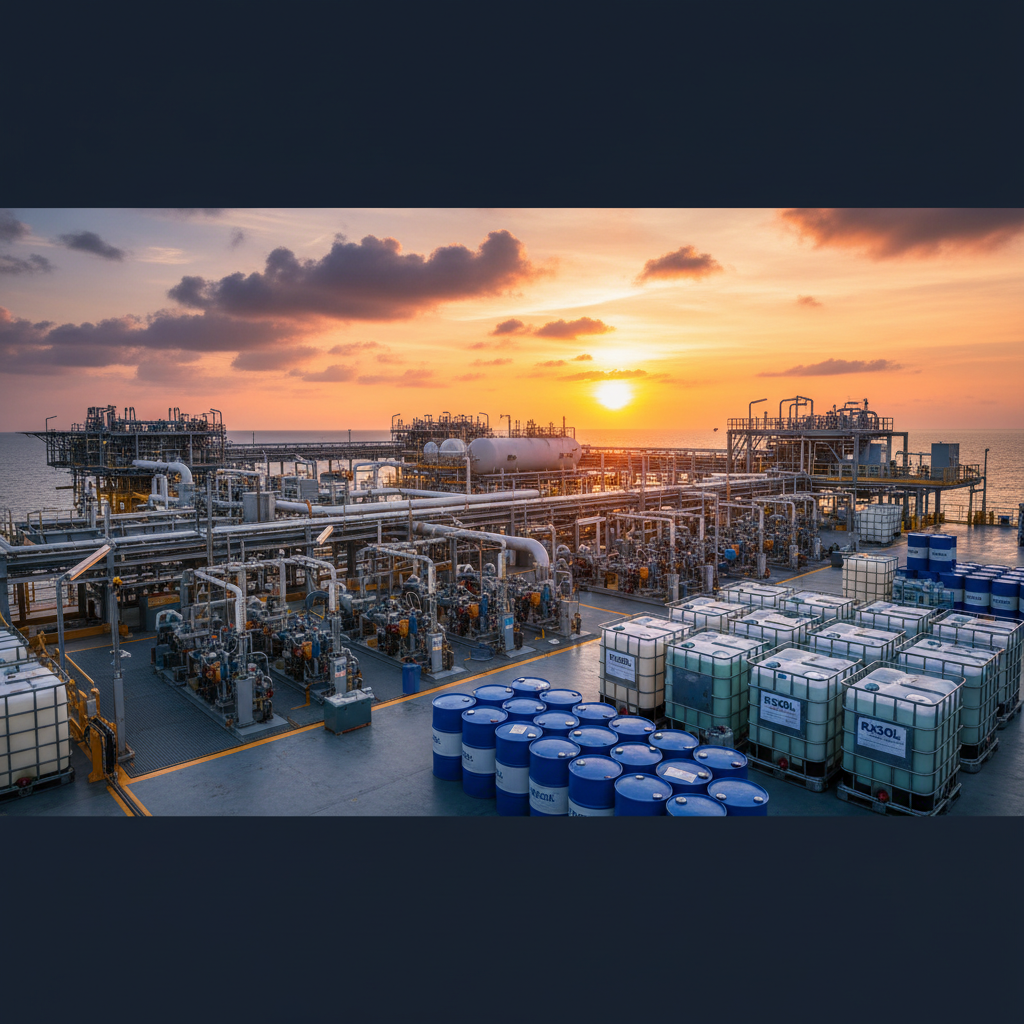
The oil and gas industry across the UAE, Saudi Arabia, Qatar, and other Gulf Cooperation Council nations generates millions of barrels of produced water daily. Managing this water efficiently, safely, and within strict environmental regulations requires a sophisticated portfolio of oilfield water treatment chemicals in UAE and GCC operations. From scale inhibition and corrosion control to deoiling and injection system chemistry, the right chemical treatments are essential to maintaining production uptime, protecting high-value equipment, and meeting overboard discharge standards. This comprehensive guide covers everything upstream operators, chemical buyers, and facility managers need to know about selecting, sourcing, and deploying oilfield water treatment chemicals across the region—and how Abu Dhabi Chemicals, Abu Dhabi's leading supplier, delivers integrated solutions from a single trusted source.
What Are Oilfield Water Treatment Chemicals and Why They Matter
Oilfield water treatment chemicals are specialized formulations designed to condition, stabilize, and prepare produced water for safe handling, reinjection, or environmental discharge. Unlike general water treatment, oilfield chemistry must address the unique challenges of high salinity, elevated temperatures, hydrocarbons, scale precursors, oxygen, and microbiological activity inherent in oil and gas production environments.
Produced water—the water that comes up with crude oil and natural gas from subsurface reservoirs—is often thousands of times more saline than seawater and frequently contains dissolved minerals, hydrogen sulfide, and other corrosive species. Without proper chemical treatment, this water causes scale deposits that plug wellbores, corrodes pipelines and production equipment, contaminates injection systems, and fails environmental compliance tests. The cost of a single scale-plugged well intervention or a corroded pipeline rupture can exceed millions of dollars and disrupt production for weeks.
Produced water treatment is one of the fastest-growing chemical spend categories in GCC upstream operations, reflecting both the maturity of the region's oil and gas fields and increasingly stringent environmental regulations. Modern oilfield water treatment chemicals supplier UAE options offer integrated treatment strategies that address multiple water quality challenges simultaneously, reducing chemical costs and improving operational efficiency.
The primary objectives of oilfield water treatment are: preventing mineral scale buildup in production and injection systems; protecting steel infrastructure from internal and external corrosion; removing residual oil to meet discharge standards; maintaining microbiological stability; and ensuring water chemistry compatibility with injection reservoirs. Each objective requires different chemistry, dosage rates, and monitoring protocols.
Types of OWT Chemicals Used in UAE and GCC Oilfields
The oilfield water treatment chemical portfolio is diverse, with formulations tailored to specific production challenges and regulatory environments across the UAE and GCC. Understanding each chemical category is essential for operators designing comprehensive water management programs.
Scale Inhibitors and Antiscalants
Scale inhibitors are among the most critical oilfield water treatment chemicals. They prevent the precipitation and adhesion of mineral scales—primarily calcium carbonate (calcite), barium sulfate, and strontium sulfate—that form as produced water cools, depressurizes, or mixes with injection water. In the harsh, high-temperature environments of Gulf oilfields, scale can form at rates exceeding 10 kilograms per day in a single wellbore, leading to production loss and expensive remediation.
Modern scale inhibitors function through crystal distortion and chelation mechanisms, preventing scale crystals from growing large enough to create plugging risks. The Condensor Dispersant Scale Fouling Controller represents an advanced formulation specifically engineered for high-temperature, high-salinity produced water environments common in UAE and GCC fields. These inhibitors are typically dosed at 20–100 ppm in produced water or injection water systems, depending on scale risk assessments and mineral saturation calculations.
Corrosion Inhibitors and Film-Forming Agents
Corrosion inhibitors protect carbon steel pipelines, tubing, and equipment from internal and external attack by oxygen, hydrogen sulfide, carbon dioxide, and organic acids present in produced water. Corrosion rates in untreated systems can exceed 10 millimeters per year, rapidly compromising pipeline integrity and forcing costly replacements.
Film-forming corrosion inhibitors create a protective barrier on steel surfaces, while filming amines provide additional protection by neutralizing acidic species. These chemicals are essential in oilfield water treatment chemicals manufacturer UAE operations, where offshore and subsea infrastructure must operate reliably for decades. Typical dosages range from 50–200 ppm, with effectiveness monitored through weight loss coupons and electrochemical testing.
Oxygen Scavengers
Dissolved oxygen is one of the most aggressive corrosants in water injection systems, capable of initiating catastrophic localized corrosion in just hours. Oxygen scavengers chemically react with and remove dissolved oxygen before it reaches carbon steel surfaces, preventing oxygen-driven pitting corrosion.
Oxygen Scavenger OxyGuard S is a thermally stable, regenerable formulation that eliminates dissolved oxygen in high-temperature environments, making it ideal for Gulf deepwater and carbonate fields. Typical dosages range from 15–50 ppm, with residual concentrations monitored to ensure complete oxygen removal. For facilities undergoing hydrostatic testing or commissioning, Hydro Testing Oxy Scavenger Biocide provides combined oxygen removal and microbial suppression during extended shutdown periods.
Biocides and Microbiological Control
Produced water systems are prone to bacterial and fungal growth, particularly in injection systems where stagnant conditions and nutrient-rich water create ideal microbiological habitats. Microorganisms produce corrosive metabolites, generate biofilms that reduce injectivity, and accelerate sulfide corrosion. Biocides prevent these issues through oxidizing or non-oxidizing mechanisms. Nutrient Solution TSP supports beneficial microbial communities in bioreactor systems used for produced water polishing, while conventional biocides suppress pathogenic microorganisms in storage and injection systems.
Deoilers and Emulsion Breakers
Residual oil in produced water creates environmental compliance challenges and reduces the effectiveness of other treatment chemicals. Deoiler formulations based on polyamine chemistry destabilize oil-water emulsions, allowing oil droplets to coalesce and separate through gravity settling or downstream coalescence equipment. These chemicals are mandatory in UAE and GCC facilities where overboard discharge limits specify less than 30 parts per million oil in water, in compliance with EGPC (Egyptian General Petroleum Corporation) and ARAMCO environmental standards.
Produced Water Management and Injection System Chemistry
Produced water handling strategies in UAE and GCC fields typically follow one of three paths: overboard discharge (in offshore fields meeting strict environmental limits), reinjection into disposal formations, or recycling into pressure support waterflooding operations. Each pathway imposes distinct water quality requirements and chemical treatment objectives.
Injection System Design and Chemistry
Water injection systems are the lifeblood of pressure maintenance and secondary recovery in Gulf oilfields. A typical injection facility receives 50,000 to over 500,000 barrels of produced or seawater daily, treats it chemically, and injects it at pressures exceeding 400 bar into subsurface formations. Any failure in chemical treatment—insufficient scale inhibition, inadequate oxygen scavenging, or microbial plugging—compromises injectivity and forces expensive remedial operations.
The injection water treatment train typically begins with free water knockout and dehydration, followed by primary filtration (down to 5–10 microns), chemical injection at multiple points, and polishing filtration (down to 2–3 microns) before the downhole injector. Each stage requires coordinated chemical treatment. Scale inhibitors are injected early to prevent scale in the treatment train itself, while oxygen scavengers must be injected immediately before filtration to prevent any oxygen-driven corrosion. Abu Dhabi Chemicals' injection chemistry specialists design custom treatment programs that balance chemical efficiency, cost, and regulatory compliance for each unique field scenario.
Produced Water Compatibility Assessment
Before reinjection into reservoir formations, produced water must be assessed for compatibility with the target formation's resident minerals and fluids. Incompatibility reactions—such as clay swelling, carbonate precipitation, or mineral dissolution—reduce porosity and permeability, permanently damaging injectivity. Chemical treatment prevents these reactions through pH buffering, ionic strength adjustment, and strategic mineral saturation control.
Operators conduct comprehensive compatibility studies combining produced water analysis, formation fluid and mineral characterization, and predictive thermodynamic modeling. Chemical treatment programs are then designed to maintain produced water within safe compatibility windows. This process is particularly critical in carbonate reservoirs—which dominate GCC fields—where small shifts in pH or carbonate saturation can cause dramatic permeability changes.
Scale Inhibition: Protecting High-Value Production Equipment
Scale formation is a constant threat in UAE and GCC oilfields, where high temperatures, high salinity, and mineral-rich produced water create ideal conditions for mineral precipitation. Understanding scale inhibitor chemistry, deployment strategies, and monitoring is essential for any upstream operator.
Scale Formation Mechanisms and Risk Assessment
Scale formation occurs when produced water becomes supersaturated with respect to minerals such as calcium carbonate, barium sulfate, or strontium sulfate. In the subsurface, as pressure drops and temperature falls, or when produced water mixes with injection water of different chemistry, precipitation risk increases dramatically. In surface facilities, further cooling and pressure reduction compound the problem.
Risk assessment begins with produced water analysis and thermodynamic modeling. Specialized software calculates saturation indices and predicts scale-forming mineral concentrations at different temperature and pressure conditions along the entire production pathway. High-risk scenarios—such as temperature drops below 50°C in North Sea-like systems or pressure drops in wellbores—identify treatment priorities.
Scale Inhibitor Selection and Dosing
Scale inhibitors function through multiple mechanisms: precipitation inhibition (preventing new crystals from nucleating), crystal growth inhibition (distorting crystal lattices so growth halts), and dispersion (keeping precipitated scale suspended rather than allowing adhesion to surfaces). Different inhibitor chemistries excel at different scales and temperature ranges.
Phosphonate-based inhibitors like Condensor Dispersant Scale Fouling Controller provide excellent calcium carbonate and mixed salt inhibition across a wide temperature range, making them ideal for both production and injection systems in UAE and GCC fields. Polymeric inhibitors offer superior barium sulfate and strontium sulfate protection but may have temperature limitations in deepwater applications.
Dosing decisions depend on scale risk severity, inhibitor chemistry, and economic constraints. Squeeze treatments—where inhibitor is injected into the wellbore matrix to provide 6–12 months of inhibition without continued topside dosing—are common in high-risk wells but require careful design and monitoring. Continuous injection programs ensure consistent inhibitor presence and are preferred in systems with unpredictable water chemistry or multiple injection points.
Scale Inhibitor Monitoring and Efficacy Verification
Active monitoring of scale inhibitor performance is critical. Operators employ multiple verification methods: analyzing produced water for scale-forming ions and saturation indices, collecting scale coupons that accumulate inhibitor-protected and inhibitor-free deposits for comparison, conducting regular wellbore interventions to document scale buildup, and using production decline curve analysis to detect hidden scale accumulation in wellbores.
Laboratory testing validates inhibitor performance under specific field conditions before full-scale deployment. Dynamic scaling tests replicate field temperature, pressure, and water chemistry to measure the effectiveness of candidate inhibitor chemistries. These tests are essential when switching oilfield water treatment chemicals supplier UAE vendors or when field conditions change materially.
Oxygen Scavenging: Preventing Pipeline Corrosion Offshore
Dissolved oxygen in injection water systems is one of the most insidious corrosive agents in upstream operations, capable of destroying millions of dollars in infrastructure rapidly. Oxygen scavengers are mandatory in modern water injection operations across the UAE and GCC, yet many operators misunderstand their chemistry and optimal deployment.
Oxygen Corrosion Mechanisms and Risk Factors
Dissolved oxygen drives oxygen reduction reactions on steel surfaces, creating a corrosive environment that causes rapid localized pitting. Unlike general carbon dioxide or hydrogen sulfide corrosion, which develop gradual, somewhat predictable corrosion rates, oxygen-driven corrosion is catastrophic, often penetrating steel by 5–10 millimeters or more in weeks. Oxygen-induced localized corrosion has caused pipeline ruptures and platform incidents across the North Sea, the Gulf of Mexico, and the Arabian Gulf.
Oxygen ingress occurs primarily during water intake—through aeration at intake points, contamination from air leaks in transfer lines, or inadequate deaeration in treatment facilities. Seawater systems are particularly vulnerable because intake water contains approximately 6–8 parts per million dissolved oxygen at ambient temperature. Even with careful intake design, residual oxygen often remains in the water entering the treatment facility.
Oxygen Scavenger Chemistry and Performance
The two primary classes of oxygen scavengers are regenerable compounds (primarily reducing agents like sodium sulfite and sodium bisulfite) and non-regenerable compounds (primarily hydrazine and organic reducing agents). Regenerable scavengers react irreversibly with oxygen and must be replenished as oxygen enters the system. Non-regenerable scavengers can be designed to provide longer-lasting protection through chelation or other mechanisms.
Oxygen Scavenger OxyGuard S is specifically formulated for high-temperature injection systems where thermal stability and rapid reaction kinetics are critical. Unlike conventional sodium sulfite, which decomposes above 80°C and provides only temporary protection, OxyGuard S maintains efficacy at temperatures exceeding 120°C, making it ideal for Gulf deepwater and Arabian carbonate fields. The formulation includes synergistic additives that enhance reaction rate and prevent decomposition, ensuring complete oxygen removal even in high-temperature water injection systems.
Dosing is based on measured dissolved oxygen content plus a safety margin. Oxygen scavenger is typically dosed at 15–50 ppm, with residual concentrations monitored through dissolved oxygen analyzers. For oilfield water treatment chemicals price UAE considerations, operators often employ sequential injection strategies: high-dose oxygen scavenger at the intake treatment facility, followed by lower-maintenance doses at critical points downstream to maintain protection against oxygen reingress.
Oxygen Scavenging in Hydrostatic Testing and Commissioning
Hydrostatic testing—where pipelines and equipment are filled with water and pressurized to prove integrity—creates a specialized oxygen scavenging challenge. The water is typically held in the system for extended periods (days to weeks) while it aerated initially and contains elevated dissolved oxygen. If not treated, severe corrosion can occur internally during the test itself.
Hydro Testing Oxy Scavenger Biocide addresses this dual requirement, combining oxygen removal with biocidal activity to prevent microbiological growth during extended testing periods. This specialized formulation is dosed into hydrostatic test water at project startup and maintained throughout the testing campaign, protecting expensive infrastructure during the critical pre-operational phase.
Deoiling and Produced Water Polishing for Environmental Compliance
Environmental regulations in the UAE and GCC are increasingly stringent regarding oil in water limits for overboard discharge. EGPC standards, ARAMCO specifications, and local environmental authorities all enforce strict limits—typically 30 parts per million or lower—for oil and grease in discharged produced water. Deoiling chemicals are essential to meeting these standards while maintaining cost-effective operations.
Oil-Water Emulsion Chemistry and Stability
Produced water often contains oil in the form of stable emulsions, where oil droplets are dispersed throughout the water phase and stabilized by natural surfactants (asphaltenes, naphthenic acids) and suspended solids. These emulsions resist gravity separation and traditional demulsification, requiring chemical intervention to break the emulsion and allow oil recovery.
Oil-water emulsions in produced water are typically complex mixtures: a continuous water phase containing dissolved salts and minerals, dispersed oil droplets ranging from 1 to 100 micrometers in diameter, stabilized by natural and anthropogenic surfactants, and suspended solids such as iron hydroxides and drill cuttings. The stability of these emulsions depends on interfacial tension, emulsifier concentration, and the ionic strength of the continuous phase.
Deoiler Chemistries and Mechanisms
Deoilers are surfactant-based chemicals that destabilize emulsions through several mechanisms: competitive adsorption at the oil-water interface (displacing natural stabilizers), flocculation of stabilizing colloids, and coalescence promotion (encouraging small droplets to combine into larger droplets that separate by gravity). Modern deoilers are designed to be effective across a wide range of temperatures, pH values, and water chemistries without leaving harmful residues.
Polyamine-based deoiler formulations are particularly effective in high-salinity produced water environments common in UAE and GCC fields. The polyamine chemistry provides strong electrostatic interactions with emulsion stabilizers, breaking the emulsion efficiently at relatively low dosages (10–50 ppm depending on the oil content and emulsion stability). These formulations are non-toxic, biodegradable, and compatible with downstream biological treatment processes.
Deoiler deployment typically follows gravity separation or hydrocyclone pretreatment that removes bulk oil and suspended solids. Residual oil in the water phase (typically 200–500 ppm) is then treated with chemical deoiler, which destabilizes the emulsion and allows coalescence treatment through additional separation equipment such as plate-frame separators or ultrasonic coalescence devices. Final polishing may employ sand filtration and activated carbon adsorption to achieve final oil content below 30 ppm.
Produced Water Polishing and Reuse Applications
In some UAE and GCC fields, treated produced water is recycled into waterflooding operations, reducing freshwater consumption and environmental impact. This requires more aggressive polishing than overboard discharge standards demand. Polishing stages typically include multimedia filtration (10–5 micrometers), activated carbon adsorption (removing residual oil and organic sulfur compounds), ion exchange or reverse osmosis (removing dissolved minerals), and occasionally bioreactor treatment (removing biodegradable organic matter and preventing microbial growth in injection systems).
Chemical treatment supports each polishing stage. Deoilers remove oil before filtration, preventing filter clogging. Scale inhibitors maintain water chemistry compatibility with the target injection formation. Biocides and nutrient solutions manage microbiological activity in bioreactor systems. The integrated chemical program ensures treated water meets stringent quality standards for reinjection, allowing operators to maximize value from every barrel of produced water.
How to Source Oilfield Water Treatment Chemicals in UAE and GCC
Sourcing reliable, cost-effective oilfield water treatment chemicals is a critical function for upstream operators in the UAE and GCC. The decision involves technical evaluation, regulatory compliance assessment, supply chain reliability, and cost optimization—often with production uptime at stake.
Evaluating Chemical Suppliers and Technical Capabilities
When selecting an oilfield water treatment chemicals supplier UAE, operators should assess multiple factors: technical expertise and field experience in similar geological and operational environments; access to specialized testing facilities for efficacy validation; regulatory compliance credentials and certifications; supply chain resilience and local inventory availability; and long-term partnership commitment rather than transactional pricing focus.
Leading suppliers maintain technical support teams with upstream industry experience, understand GCC-specific challenges (high temperatures, high salinity, complex geology, strict environmental standards), and offer customized treatment programs rather than one-size-fits-all packages. Site visits, field data exchange, and pilot testing programs are indicators of a supplier committed to optimal results rather than simply moving product.
Regulatory compliance is non-negotiable. Oilfield water treatment chemicals manufacturer UAE facilities should comply with ADNOC specifications, ARAMCO standards, and local environmental regulations. ISO certifications (ISO 9001 for quality management, ISO 14001 for environmental management) and specific oilfield certifications (such as IATC—Inter-Tidal Advisory Committee—approval for marine discharge applications) demonstrate commitment to standards.
Cost Structure and Pricing Models
Oilfield water treatment chemical pricing in the UAE and GCC typically follows a tiered structure based on annual consumption volumes, treatment complexity, and supply location. Oilfield water treatment chemicals price UAE varies significantly between bulk wholesale supplies (serving major ADNOC and ARAMCO facilities) and smaller independent producer pricing.
Understanding cost structure is essential for optimization. Inhibitor costs, for example, vary by chemistry and performance level. Phosphonate-based inhibitors like Condensor Dispersant typically cost 3–5 USD per liter, while polymeric inhibitors may exceed 8–12 USD per liter for superior sulfate scale protection. Oxygen scavengers range from 2–4 USD per liter depending on thermal stability and regenerability. Deoiler formulations typically cost 4–7 USD per liter.
Annual chemical spend for a mid-sized waterflood operation (200,000 barrels per day injection) typically ranges from 2–5 million USD, depending on treatment intensity and water chemistry complexity. Volume purchasing, longer-term agreements, and strategic product selection can reduce costs significantly. However, false economy—selecting cheaper chemistry that provides inferior treatment—often backfires through equipment damage, production loss, or environmental compliance failures.
Bulk Supply Sourcing and Logistics
An oilfield water treatment chemicals bulk supplier GCC must offer reliable delivery, quality assurance, and technical support infrastructure. Most major operators contract with bulk suppliers for annual or multi-year agreements specifying monthly or quarterly deliveries, quality specifications, and technical support provisions. Bulk pricing typically reflects 15–25% discounts versus smaller-volume sales, making volume consolidation an important cost optimization strategy.
Logistics considerations are critical in GCC oilfield operations. Suppliers must maintain facilities strategically located relative to major oilfield clusters (such as the Safaniyah field cluster in Saudi Arabia, the Greater Burgan field in Kuwait, or the Zakum and Sarjeh fields in the UAE). Local storage capacity allows rapid response to emergency orders and provides buffer stock during supply chain disruptions.
Technical Consultation and Custom Program Development
The most sophisticated operators engage suppliers in collaborative technical development programs, exchanging produced water analyses, geological data, and operational experience to develop optimized treatment programs specific to each field's unique challenges. This partnership approach often yields superior results compared to standard product recommendations.
Technical consultation should encompass field water analysis, produced water compatibility assessment, saturation index calculations, corrosion risk evaluation, and treatment program design. Laboratory pilot testing validates recommended chemistries under representative field conditions before full-scale implementation. Ongoing monitoring programs track treatment efficacy and allow continuous optimization as field conditions evolve.
Abu Dhabi Chemicals' Complete OWT Chemical Range and Applications
Abu Dhabi Chemicals represents a trusted partner for oilfield water treatment in the UAE and GCC, offering an integrated portfolio of proven chemistries backed by deep upstream industry expertise and local operational knowledge.
Comprehensive Product Portfolio and Field Flexibility
Abu Dhabi Chemicals supplies the full spectrum of oilfield water treatment chemicals, allowing operators to source integrated solutions from a single oilfield water treatment chemicals exporter Abu Dhabi. This approach simplifies procurement, ensures chemical compatibility, and enables coordinated technical support across all treatment stages.
The Abu Dhabi Chemicals product range includes: advanced scale inhibitor formulations like Condensor Dispersant Scale Fouling Controller for calcium carbonate and mixed salt prevention; high-temperature oxygen scavenging via Oxygen Scavenger OxyGuard S for water injection systems and subsea infrastructure; specialized deoiler chemistry in polyamine-based formulations for efficient oil-water emulsion breaking; biocide and bioreactor support through Hydro Testing Oxy Scavenger Biocide and Nutrient Solution TSP; and complementary chemistries addressing corrosion control, microbiological management, and produced water polishing.
Scale Inhibitor Applications Across GCC Field Types
Abu Dhabi Chemicals' Condensor Dispersant Scale Fouling Controller represents a breakthrough in multi-mineral scale inhibition, specifically formulated for the challenging produced water environments of UAE and GCC oilfields. The chemistry provides superior inhibition of calcium carbonate scale across the temperature range typical in Gulf offshore operations (from cool wellhead temperatures approaching 20°C to hot subsurface conditions exceeding 150°C).
Field applications span production tubing scale prevention, injection system protection, and surface facility equipment integrity. The inhibitor is particularly effective in high-salinity, high-magnesium environments where conventional inhibitors may fail. Abu Dhabi Chemicals technical specialists conduct saturation index analysis on client produced water samples, determining optimal dosage rates and deployment strategies for specific field conditions. Continuous monitoring programs track mineral saturation and produced water chemistry, allowing real-time program adjustments as field conditions evolve.
Oxygen Scavenging for Water Injection Infrastructure
Water injection systems are the core of pressure maintenance and secondary recovery across the UAE and GCC, making oxygen scavenging not optional but mandatory for reliable long-term operation. Abu Dhabi Chemicals' Oxygen Scavenger OxyGuard S provides thermal stability and rapid reaction kinetics essential in high-temperature injection operations.
The formulation is specifically engineered for the temperature and pressure profiles of Gulf deepwater and carbonate reservoir injection. Unlike generic oxygen scavengers that lose efficacy above 80–90°C, OxyGuard S maintains full scavenging capacity at temperatures exceeding 120°C, protecting injection infrastructure in the harshest subsea environments. Residual dosing strategies maintain protection against oxygen reingress from air leaks or inadequate deaeration, ensuring long-term reliability.
Abu Dhabi Chemicals provides comprehensive oxygen scavenging programs: design consultation for injection facility layout and chemical injection point optimization; dosage recommendations based on measured dissolved oxygen content and temperature profiles; ongoing monitoring through dissolved oxygen analysis; and rapid response protocols for oxygen ingress events that could compromise system integrity.
Deoiling and Produced Water Treatment Solutions
Environmental compliance in the UAE and GCC demands efficient oil removal from produced water. Abu Dhabi Chemicals' polyamine-based deoiler chemistry achieves final oil concentrations well below 30 ppm limits while maintaining cost-effectiveness and compatibility with downstream treatment processes.
The deoiler chemistry is non-toxic, fully biodegradable, and compatible with biological treatment processes used in advanced produced water polishing systems. Field applications include overboard discharge polishing in offshore facilities, recycled water treatment for waterflooding systems, and produced water reuse in industrial applications. Abu Dhabi Chemicals' technical team designs treatment train configurations optimizing deoiler placement, dosage timing, and downstream separation equipment selection for maximum efficiency.
Specialized Chemistries for Challenging Field Scenarios
Beyond standard scale inhibition and oxygen scavenging, Abu Dhabi Chemicals supplies specialized chemistries addressing specific field challenges. Hydro Testing Oxy Scavenger Biocide serves the critical niche of pre-operational commissioning, protecting expensive pipeline and equipment infrastructure during hydrostatic testing campaigns where oxygen-driven corrosion risk is highest.
Nutrient Solution TSP supports bioreactor operations for advanced produced water polishing, where biological treatment removes residual hydrocarbons and organic sulfur compounds for water reuse applications. The formulation provides balanced macro and micronutrients while avoiding inhibitory concentrations, allowing optimal microbial community development for efficient treatment.
Technical Support Infrastructure and Field Partnership
Abu Dhabi Chemicals' value extends beyond product supply to integrated technical partnership. The Abu Dhabi-based team maintains continuous engagement with client operations: conducting regular field visits and data reviews; analyzing produced water samples through advanced laboratory facilities; performing saturation index and compatibility calculations; designing customized treatment programs; validating chemistry through pilot testing; and monitoring ongoing treatment efficacy through produced water analytics and performance metrics.
This partnership approach has established Abu Dhabi Chemicals as the preferred supplier for independent producers and smaller operators across the UAE and GCC who benefit most from dedicated technical attention. Larger integrated operators also partner with Abu Dhabi Chemicals for specific applications—such as challenging scale inhibition scenarios or high-temperature oxygen scavenging—where specialized expertise and proven field performance justify dedicated supplier relationships.
Supply Chain Reliability and Local Availability
Operating as an oilfield water treatment chemicals exporter Abu Dhabi, Abu Dhabi Chemicals maintains local inventory and manufacturing capacity, ensuring rapid response to client needs. This local presence provides significant competitive advantages: faster delivery times compared to international suppliers, reduced logistics costs for bulk supplies, and ability to respond emergently to production disruptions requiring rapid chemical deployment.
Abu Dhabi Chemicals' Abu Dhabi facility is strategically positioned to serve the major oilfield clusters of the UAE, Saudi Arabia, Qatar, and Kuwait. Monthly or quarterly bulk deliveries can be coordinated directly with client production schedules, minimizing storage requirements at field facilities while ensuring adequate inventory for uninterrupted treatment. For emergency situations—such as unexpected scale-related production loss requiring immediate inhibitor deployment or oxygen ingress events necessitating rapid scavenger injection—Abu Dhabi Chemicals maintains rapid-response protocols with local stock positioned for quick mobilization.
Regulatory compliance is embedded in Abu Dhabi Chemicals' supply chain. All products meet ADNOC specifications, ARAMCO standards, and local environmental requirements. Quality assurance protocols ensure consistent chemistry, potency, and performance across all batches. Third-party testing and certification provide independent verification of product specifications, protecting client investments and ensuring compliance with stringent upstream standards.
Custom Formulation and Application Development
While Abu Dhabi Chemicals' standard product portfolio addresses the vast majority of GCC oilfield water treatment requirements, the company also offers custom formulation development for unique field challenges. Operators with unusual produced water chemistry, extreme temperature conditions, or specialized treatment objectives can engage Abu Dhabi Chemicals' development team in collaborative programs creating optimized chemistries specific to their applications.
Development programs combine laboratory testing with pilot field implementation, allowing careful validation before full-scale deployment. This flexibility has enabled Abu Dhabi Chemicals to solve complex treatment challenges in deep carbonate reservoirs, high-pressure subsea systems, and unconventional field scenarios where standard chemistries require optimization.
The company's commitment to technical leadership in oilfield water treatment positions Abu Dhabi Chemicals as more than a chemical supplier—rather, as an operational partner focused on maximizing production uptime, protecting infrastructure integrity, and ensuring environmental compliance across every aspect of produced water management.
Explore Abu Dhabi Chemicals' complete oilfield water treatment chemical range — request a technical consultation and bulk supply quote today.
Frequently Asked Questions: Oilfield Water Treatment Chemicals UAE & GCC
What are the main categories of oilfield water treatment chemicals?
The principal categories are scale inhibitors (preventing calcium carbonate, calcium sulphate, and barium sulphate deposition in pipelines and wellbores), biocides (controlling sulphate-reducing bacteria and other microorganisms in produced water systems), oxygen scavengers (removing dissolved oxygen to prevent corrosion in injection water), demulsifiers (separating oil from produced water emulsions), coagulants and flocculants (for produced water clarification), and pH adjustment chemicals. Each category addresses a specific water quality challenge in upstream and midstream oilfield operations.
How do oilfield water treatment chemical requirements differ between UAE and other GCC countries?
UAE oilfield water treatment is dominated by ADNOC's large-scale water injection programmes (used for reservoir pressure maintenance), produced water handling at offshore platforms, and desalination for utility water. Saudi Arabia (Aramco operations) requires chemicals for very high-volume produced water re-injection. Oman's Petroleum Development Oman (PDO) operations involve EOR (Enhanced Oil Recovery) water flooding. While the chemistry is similar, regulatory approvals (ADNOC, Aramco, PDO, KNPC) and product qualification requirements differ by operator. Abu Dhabi Chemicals supplies to operators across all these countries with region-appropriate documentation.
What is the typical dosage rate for scale inhibitors in water injection systems?
Scale inhibitor dosage rates in water injection systems typically range from 5–50 ppm (parts per million) depending on the water composition (calcium, magnesium, bicarbonate, sulphate levels), temperature, and pressure conditions. Squeeze treatment programmes for wellbore scale inhibition may use higher initial concentrations. Accurate dosage requires water analysis and inhibitor jar tests — Abu Dhabi Chemicals' technical team can assist with dosage programme design for specific reservoir conditions.
Are oilfield water treatment chemicals hazardous, and how are they safely stored in UAE?
Many oilfield water treatment chemicals are classified as hazardous materials under UAE regulations. Biocides are typically classified as toxic, while some scale inhibitors and demulsifiers are corrosive or flammable. UAE storage requirements mandate secondary containment, proper bunding, ventilation, and chemical segregation per GHS hazard categories. MSDS and chemical segregation plans must be maintained on-site. Abu Dhabi Chemicals provides compliant MSDS documentation and can advise on UAE chemical storage regulations for your facility.
How quickly can oilfield water treatment chemicals be delivered across the GCC?
From Abu Dhabi Chemicals' Fujairah warehouse, delivery to UAE locations is typically 24–48 hours. Road freight to Oman (Muscat) takes 6–8 hours; to Saudi Arabia (via Al Batha border) 2–3 days. Qatar and Kuwait deliveries are arranged via sea freight or air freight for urgent requirements. For regular supply contracts, we establish scheduled delivery programmes aligned with your chemical consumption rates and storage capacity.
Need Technical Assistance?
Contact our Fujairah team with your application and product requirements. Request the current supplier specifications and safety documentation before ordering.